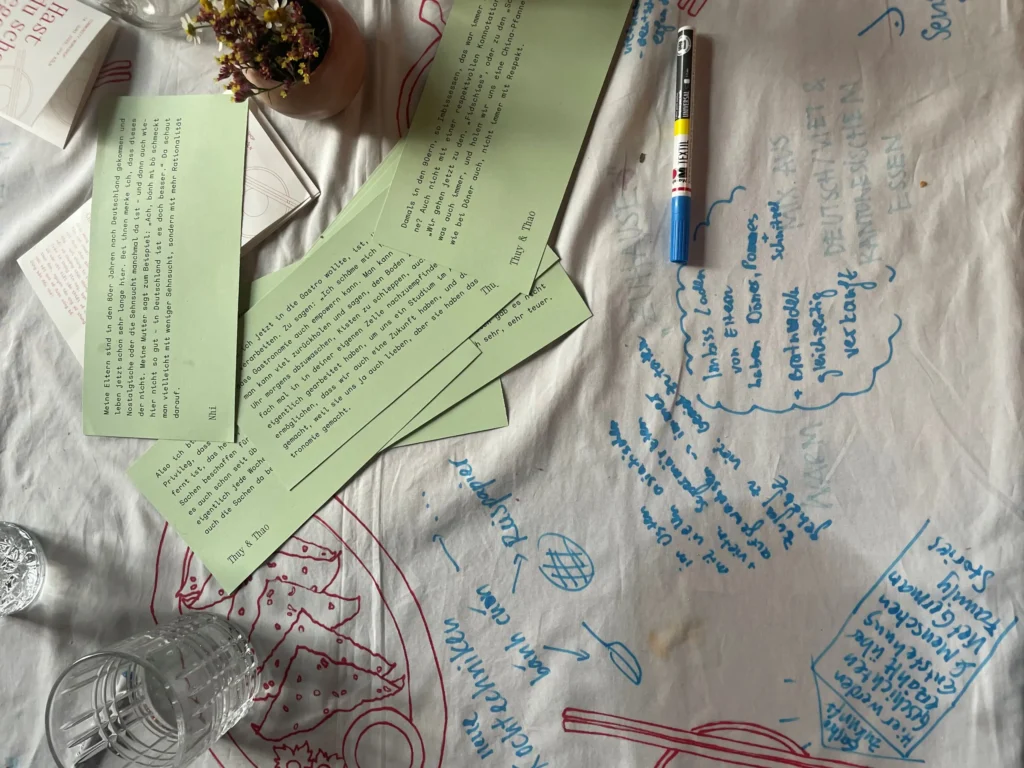
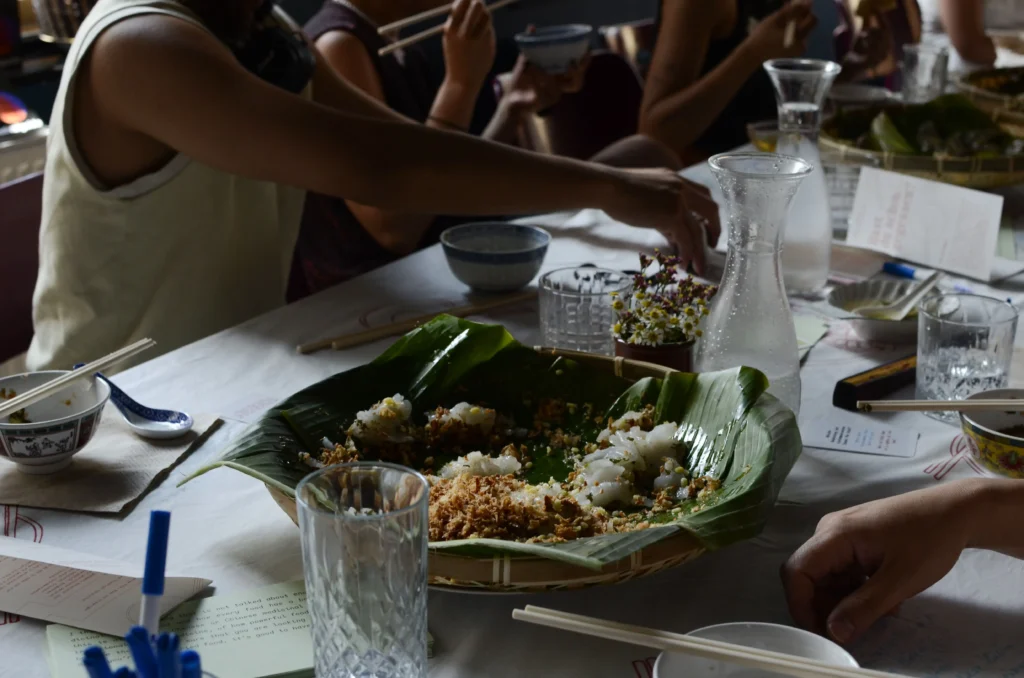
In most major German cities, Vietnamese restaurants are now a normal part of the cityscape. They often sell the same dishes in front of the same, supposedly authentic decor. Most of the dishes sold correspond to the German image of “Asian food.” The actual diversity of the food culture and the associated contextual knowledge is not reflected, as expressed, for example, by secret menus reserved for people with a Vietnamese migration history. Ingredients that are considered too foreign, exotic, smelly, or unhygienic are not regularly served because restaurateurs depend on the palates and taste buds of those who can afford to eat out. This circumstance leads to the majority society determining what is considered edible and “Vietnamese,” and knowledge about the actual food culture is made invisible.
The project aims to raise awareness of Vietnamese cuisine in the context of colonial and migration histories and to destigmatize it by deconstructing existing narratives that shape our view of food culture. The project contributes to promoting empowerment for a self-determined food culture by translating individual experiences in the diaspora into a collective and self-determined collection of knowledge. Talking about food also aims to facilitate knowledge transfer between generations, which can be influenced by language barriers and transgenerational trauma.
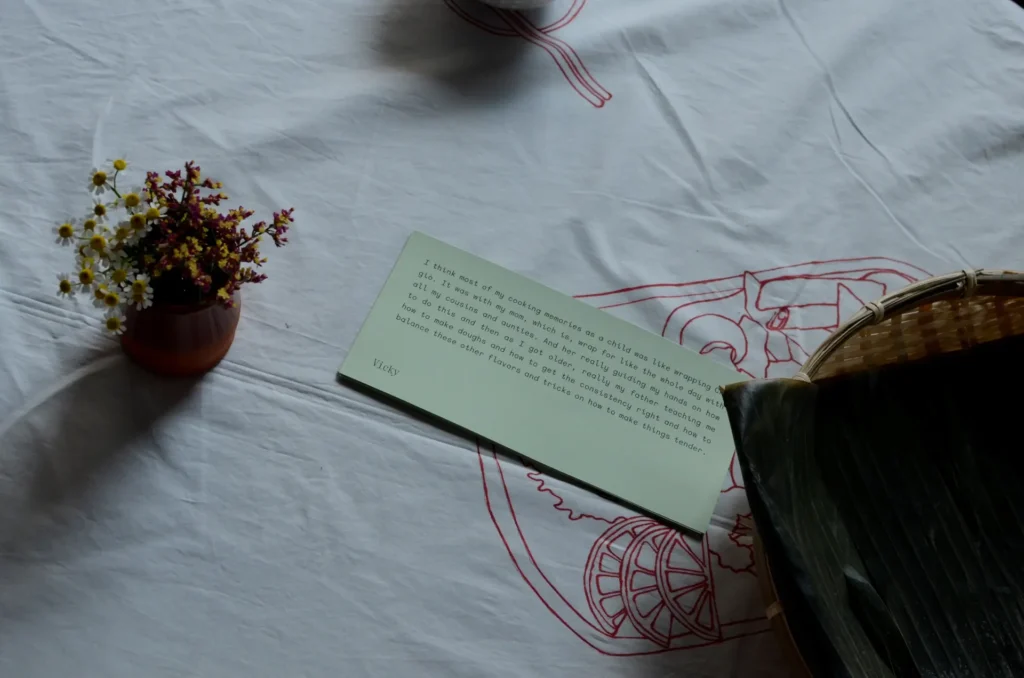
The project aims to collect migration stories related to food and nutrition in community workshops and through digital documentation. In the community workshops, participants eat together and work on a collective tablecloth that documents marginalized knowledge in text and drawings. The content published on this website serves as an ongoing and collaborative collection of knowledge and experiences from the community for the community.